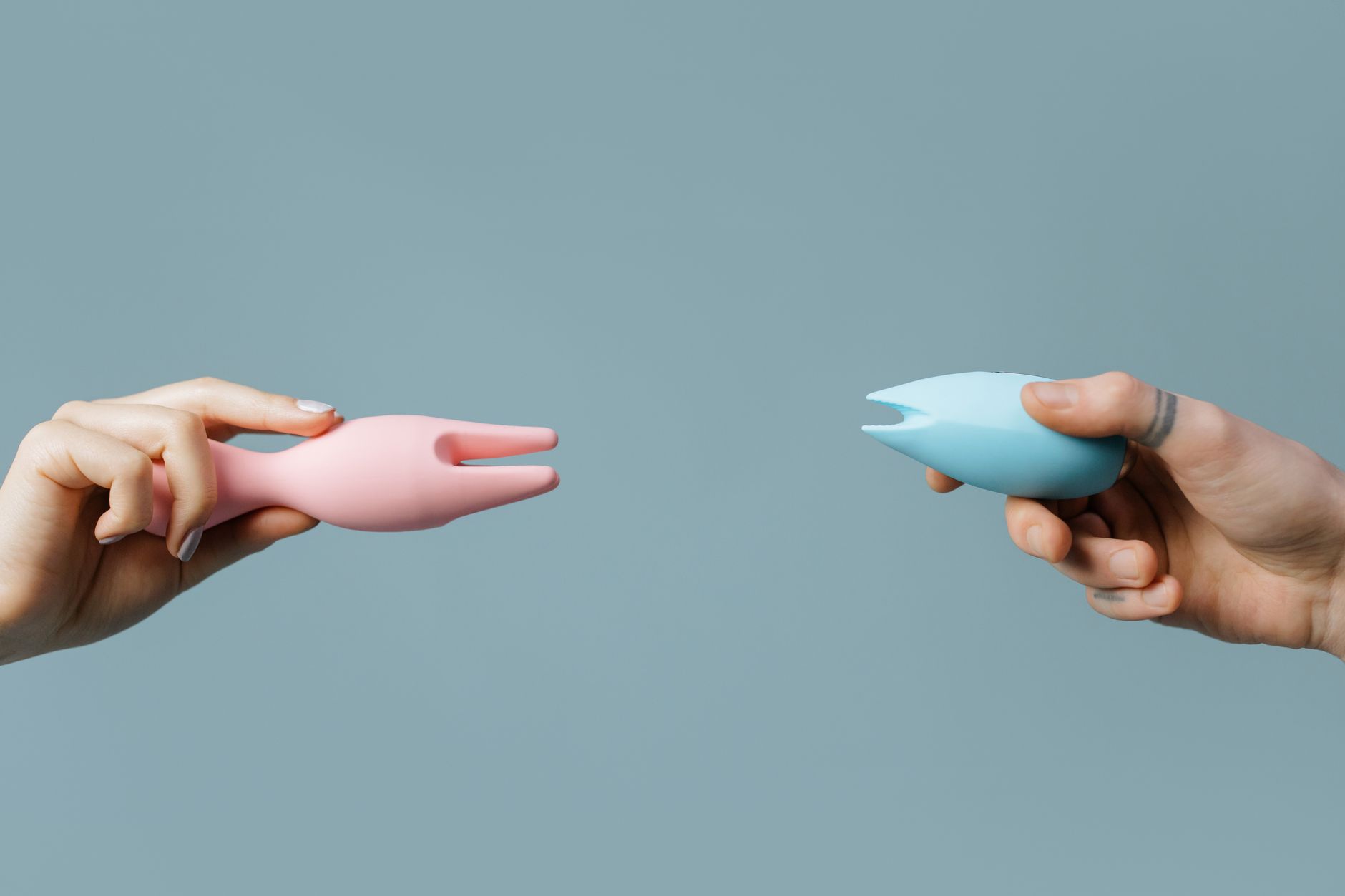
Let's talk about the elephant in the room
You want to bring a lemon vibrator into your partnered sex life, and you're nervous about it. That's completely normal. Most people worry that mentioning a vibrator will somehow signal that their partner isn't enough, or that the conversation itself will kill the mood entirely. Here's what I've seen in decades of couples counseling: the moment you actually start talking about it, most of that anxiety dissolves. The scary part isn't the vibrator. It's the conversation.
Once you get past that conversation, using lemon vibrators as a couple becomes less like introducing a third wheel and more like discovering a new language you both speak.
Why couples actually bring vibrators into their intimate life
Let me be direct: it's not because one person is failing. It's usually one of three things.
First, exploration. You're curious about what new sensations feel like together. Second, efficiency. If it takes a long time for one partner to reach orgasm, a clitoral vibrator like the Lem can bridge that gap without anyone feeling rushed or inadequate. Third, access. Some bodies respond better to specific types of stimulation, and a lemon vibrator offers that precision in a way fingers or other approaches sometimes can't.
None of those reasons means something is broken. They mean you're both interested in expanding what intimacy can be.
The conversation: timing and framing
Don't bring this up mid-sex or right before sex. Don't lead with "I need a vibrator because." That frames it as a problem.
Instead, pick a calm moment outside the bedroom. Afternoon coffee, a walk, whenever you both feel relaxed and present. Start with curiosity, not complaint.
"I've been thinking about trying a vibrator together. I'm curious what you'd think about exploring that." That's it. That's the opener.
What matters next is listening. Your partner might be excited. They might feel hesitant, or they might need time. If they're uncertain, ask why. Fear of inadequacy is common, so you might hear "I thought I was enough for you." You're not responding to the literal words. You're responding to the vulnerability underneath.
A good response: "You absolutely are. That's not what this is about. I want to explore sensation together. I want to see what feels good for both of us. Would you be open to thinking about it?"
If the answer is still no right now, respect that. Pressure kills curiosity faster than anything. Revisit it in a few months.
If they're interested but nervous, that's actually ideal. Nervousness means they care about getting it right. That's workable.
Choosing the right vibrator for your shared exploration
Not all lemon vibrators are the same. For first-time couples exploration, you want something intuitive and not intimidating.
The Lem clitoral vibrator works well for this because it's elegant, quiet, and has a straightforward control. You're not fiddling with ten settings while trying to stay present with your partner. The design is also educational because it teaches you and your partner about what types of stimulation feel good without overcomplicating things.
When you order, talk about it openly. "This one has good reviews from couples" or "This one is quieter, which I like." Treating the purchase as a joint decision matters psychologically. It's not something one person snuck in. It's something you chose together.
The first time: setting the stage
You've had the conversation. The vibrator has arrived. Now what.
Pick a time when you both have space and energy. Not the quickie before work. Not when one of you is exhausted. You want at least 30 minutes of actual unrushed time.
Set the environment. Dim lighting helps. Temperature matters more than people think. You want to be comfortable enough to relax. Remove the phone. Tell the roommate or kids or whoever that you need uninterrupted time.
Start with physical connection that doesn't involve the vibrator. Kiss, touch, remember how it feels to be close to each other. This isn't rushing to the new thing. This is building baseline intimacy so that when you introduce the vibrator, it feels like a natural escalation, not a sudden pivot.
When you're both aroused and relaxed, bring it into play slowly. Let your partner hold it first if they're comfortable. Let them decide when to use it. Handing over some control makes it less like "here's what you need" and more like "here's what we're exploring together."
Common feelings and how to navigate them
Your partner might feel self-conscious watching. That's the most common hesitation. Their brain starts narrating: "Do I look weird right now? Is this taking too long? Am I doing this right?"
Normalize it. "It's okay to feel a little weird the first time. I feel weird too. Let's just focus on sensation." Humor helps. So does reassurance. If they're quiet or seem to be overthinking, you can pause and check in: "How are you feeling?"
You might feel awkward too. That's not a sign something is wrong. That's just the vulnerability of trying something new. It passes after the first or second time, usually.
Some partners worry that using a vibrator means they're not "doing it right" during partnered sex. This is worth talking about directly. A vibrator doesn't replace what you do. It augments it. If anything, it often makes partnered sex feel better because there's less performance pressure.
Building the practice into your intimate life
After the first time, there's usually a second. And a third. Here's where you learn what actually works for both of you.
Some couples find that using a lemon clitoral vibrator during partnered sex changes everything. It can shift orgasm from something that feels like work to something that feels like play. It can also make it easier to explore penetrative sex without the anxiety that one person is taking too long.
Other couples find that vibrator use is its own thing. A dedicated solo moment. A partnered moment that's different from penetrative sex. Different people integrate this differently. There's no single right way.
What matters is that you're both choosing it and that you're checking in about what's working. "That felt really good," or "I want to try it differently next time." Feedback makes the whole thing better.
Communication beats assumptions every time
Here's the pattern I see in couples who successfully explore vibrators together: they talk. Not just about logistics. About sensations, about what felt good, about what felt awkward, about desires they didn't know they had.
That conversation becomes its own form of intimacy. You're mapping each other's pleasure in a way you might never have done before. You're being vulnerable about wants and preferences. That's relationship-building work, not just sexual novelty.
If something feels off, you can name it. "I'm feeling a little disconnected. Can we slow down?" If something feels amazing, you can highlight it. "That combination right there. Yes." The vibrator becomes a tool not just for sensation but for deeper communication.
Using lemon vibrators as a couple doesn't have to be intimidating. It's an opportunity to be curious together, to learn something new about each other's bodies, and to expand what intimacy can mean. Most couples who try it find that the scariest part was the conversation. Everything after that? That's usually just pleasure.
FAQ: couples and vibrator exploration
Is it normal to feel insecure when your partner uses a vibrator?
Completely normal. Many partners worry that a vibrator means they're not doing enough. Here's the reframe: a vibrator is not a competitor. It's more like how a chef might use a specialized tool. The tool doesn't replace skill. It makes certain things possible. If your partner feels insecure, that's worth discussing outside the bedroom first. Often what comes up is "Do you still want me?" or "Am I enough?" Those are the real conversations to have.
How long does it usually take to feel comfortable using a vibrator with a partner?
It depends on the couple. Some people feel comfortable immediately because novelty feels fun. Others need two or three times before the initial awkwardness fades. By the fourth or fifth time, most couples report it feels natural. If you're still uncomfortable after five or six attempts, it might be worth asking yourself or your partner whether this is actually something you want, or whether you feel obligated.
What if my partner suggests using a vibrator and I'm resistant?
Resistance is worth exploring honestly. Is it about feeling inadequate? About religious or cultural beliefs? About worry that it will change your dynamic? Different sources of resistance need different conversations. If it's shame about sexuality, that's one conversation. If it's concern about your relationship, that's another. Honor what's underneath rather than just saying yes to avoid conflict.
Can you use a lemon vibrator during penetrative sex?
Yes, absolutely. A clitoral vibrator like the Lem can be used during penetration. The vibration on the clitoris combined with penetration creates a different sensation profile for many people. Some couples find this bridges the gap for anyone who has difficulty orgasming from penetration alone. Start slowly and communicate about what feels good.
What if one partner has a much higher sex drive than the other?
A vibrator can actually help here, counterintuitively. If one partner wants sex more often, a vibrator can provide a middle ground. It might allow for more frequent shared intimate time without requiring full penetrative sex every single time. That said, a vibrator isn't a substitute for addressing underlying mismatches in desire. Those need their own conversation.
How do you bring it up without seeming judgmental of what you're already doing?
Frame it as addition, not replacement. "I love what we do. I'm also curious about what else feels good." Curiosity is neutral. It doesn't criticize the past. It's about exploring the future together. If your partner hears criticism anyway, that might be worth understanding. Sometimes people hear judgment when none was intended because they're carrying shame from somewhere else.
The actual point
Using lemon vibrators as a couple is less about the vibrator and more about the willingness to be curious with each other. It's about naming desires, being vulnerable, and expanding what intimacy can mean. If you approach it that way, the vibrator is almost beside the point. It's just a vehicle for something deeper: two people deciding to explore pleasure together, without shame.
The conversation is the hard part. Everything after that is just discovery.
Ready to explore together? Start with the conversation. Everything else follows from there. If you have questions about how to navigate the relationship piece of this, reach out.