Let's be honest about what anxiety does to arousal
Your brain is wired to prioritize survival over pleasure. When anxiety shows up, your nervous system doesn't care about orgasms. It cares about threat. Cortisol floods your system, blood flow redirects away from your genitals and toward your muscles, and suddenly touching yourself feels impossible or pointless. This isn't a personal failure. This is biology being protective in the exact wrong moment.
The worst part is the spiral. You notice arousal isn't happening, you worry about that, the worry makes it worse, and then you're convinced something is broken. Nothing is broken. Your body is just doing its job too well.
Why standard approaches to anxiety and pleasure fail
Most advice tells you to relax first, then pursue pleasure. "Take a bath. Light a candle. Breathe deeply." These are nice. They're also backwards. You can't relax your way to arousal when anxiety is in the driver's seat.
What actually works is bypassing the anxiety gate entirely. Instead of trying to calm down enough to feel desire, you create a sensation strong enough that your brain has to pay attention to something other than the worry. This is where lemon clitoral vibrators change the game. The suction and vibration pattern demand enough neural focus that the anxiety chatter quiets down. You're not relaxing yourself into pleasure. You're overwhelming the anxiety signal with a stronger sensation.
It's counterintuitive. But it works.
How the suction mechanism helps anxiety-blocked arousal
Lemon's clitoral vibrator uses air-suction technology, which is different from traditional vibration. Instead of buzzing against your clitoris, it creates a gentle pulling sensation that feels less like friction and more like stimulation at a distance. This matters when you're anxious because friction can feel overwhelming or invasive when your nervous system is already in overdrive.
The suction pattern also offers a middle ground between doing nothing (which feels like you're waiting for desire to magically appear) and intense direct stimulation (which can feel like pressure you're not ready for). Many people find that this gentler approach actually allows arousal to build instead of triggering a panic response.
Start at pattern 1 or 2. You're not chasing an orgasm. You're just noticing sensation. That's the entire goal in this scenario.
The role of mental permission and self-compassion
Anxiety often carries shame as a side dish. You feel broken for not being in the mood. You worry your partner will judge you. You assume something is permanently wrong. None of this is true, but anxiety is excellent at lying.
Before you reach for any tool, lemon vibrators included, you need to tell yourself this explicitly: "I'm not broken. My nervous system is doing its job. This will pass. And I deserve to explore pleasure on my timeline, not shame's timeline."
This sounds soft. It matters more than the toy. Pleasure happens in the brain first. If you're using a clitoral vibrator while also internally criticizing yourself, your nervous system will keep the gates closed. Permission has to come first.
Creating an anxiety-safe pleasure space
Environment matters more than you think. If anxiety is present, your brain is scanning for threat. Loud noises, unexpected interruptions, feeling rushed, or pressure to perform will all trigger the same nervous system response that's blocking arousal in the first place.
Set yourself up with these basics:
- Lock the door. Tell your partner or household you need privacy for the next 20 minutes. Removing the possibility of interruption is huge.
- Put your phone in another room. Notifications are tiny anxiety triggers that add up.
- Use a small amount of light. Darkness can feel vulnerable when you're already anxious. A soft lamp or phone light on the dimmest setting helps your nervous system feel safer.
- Choose a time when you're not mentally exhausted. Late at night when stress is fresh or early morning before the day hits can both work, depending on when your nervous system usually settles.
You're not creating a spa experience. You're creating a space where your brain can temporarily stop scanning for danger.
How to actually start when arousal feels impossible
Don't begin with the expectation of orgasm. That's pressure. Instead, frame this as exploration. You're going to spend 10 minutes learning what sensation feels good right now, in this moment, in this particular nervous system state.
Charging your lemon clitoral vibrator first (most models last several hours on a full charge, so this is a one-time prep). Sit or lie somewhere comfortable. Take three actual deep breaths. Not performative breathing. Just oxygen in, air out.
Turn the device on at the lowest setting. Apply it gently to the outer edges of your clitoris, not directly on the tip. Let it sit there for a few seconds without movement. Notice what you feel. Not whether it feels "good" in a goal-oriented way. Just what sensation shows up. Numbness? Tingling? Pressure? All of these are data, not failures.
Move slowly. If you feel a flutter of arousal, don't chase it. Let it happen in its own time. If you don't feel anything in five minutes, that's information too. Your nervous system might need more time, or this particular setting might not be it today. Both are fine.
The pattern of consistent practice without pressure
Anxiety-blocked arousal doesn't reverse with one good session. Your nervous system learned that pleasure feels risky. It needs repeated evidence that pleasure is safe. This takes time, and that's not a flaw in the process.
Commit to exploring with your lemon vibrator three times a week for two weeks. Not to achieve orgasm. Just to get your nervous system used to the idea that paying attention to sensation doesn't mean danger is coming. After two weeks, you might notice arousal building faster. You might notice that anxiety chatter quiets down more easily. You might just feel more connected to your body.
If you have a partner, let them know what you're doing and why. "I'm working on reconnecting with my body. I need some solo space to do that." Most partners respect this. It also removes the pressure of performing for someone else while your nervous system is already in recovery mode.
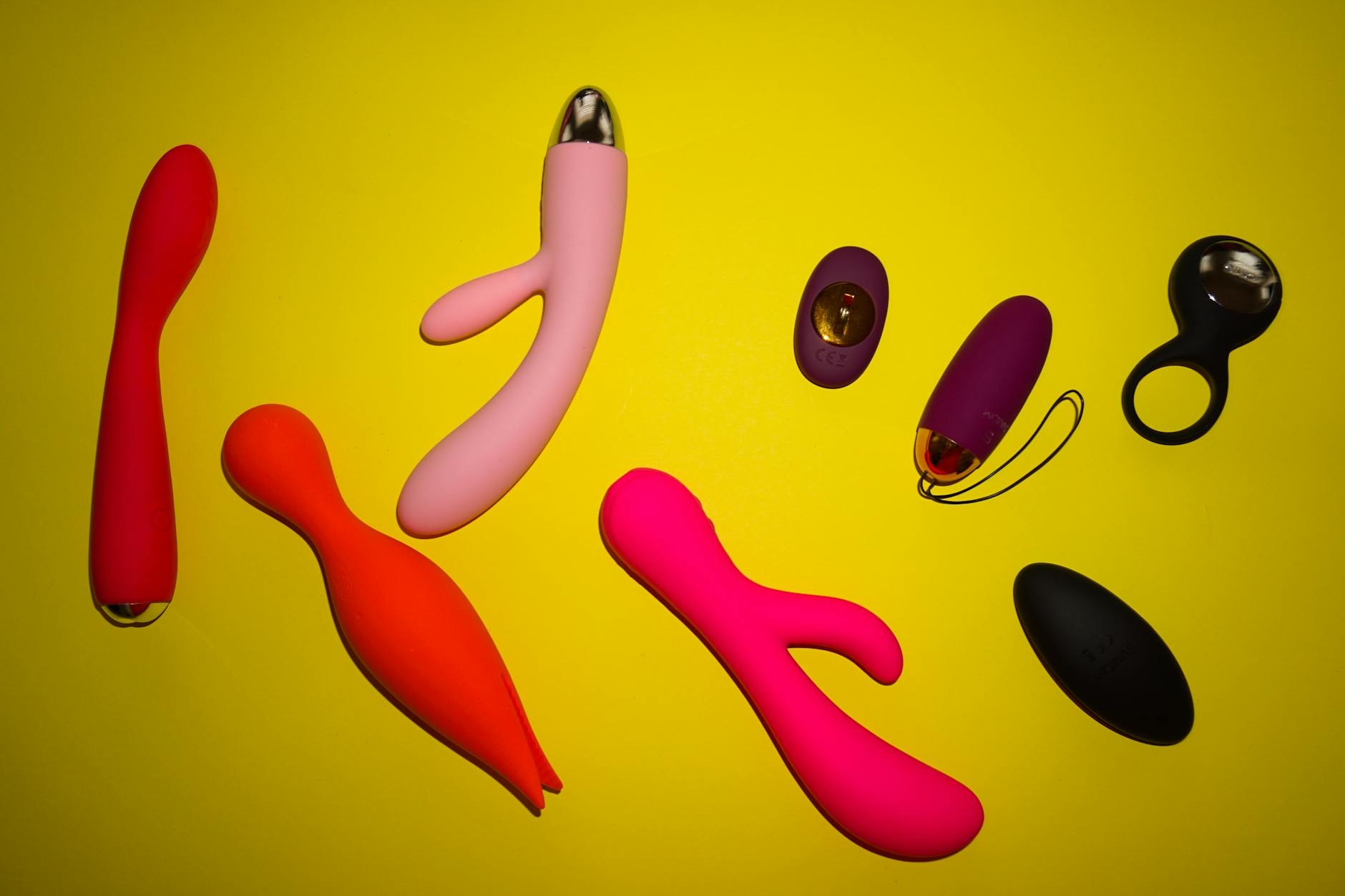
Photo by FounderTips on Pexels
When to bring your partner into the exploration
Once you've had a few solo sessions and you're noticing that arousal feels slightly more accessible, involving a partner can actually help. Not because partners are magic, but because shared vulnerability often calms anxiety. If your partner knows you're anxious about this and they're gentle and patient, their presence becomes a signal to your nervous system that this is safe.
This only works if your partner is on board with the slowness. Fast-tracked arousal after anxiety often just recreates the pressure that caused the anxiety in the first place. Talk about it. "I'd like you to touch me with the lemon vibrator while we're together, but I need us to take it slow and for you not to expect any particular outcome." This conversation might feel awkward. It's one of the most important ones you can have.
The body's response over time
After consistent, pressure-free exploration with your lemon clitoral vibrator, most people notice a shift. Not overnight. Usually in two to four weeks. Arousal comes faster. The anxiety chatter quiets down more readily. You start to trust your body again instead of fighting it.
This doesn't mean anxiety goes away permanently. But you've proven to your nervous system that pleasure is possible even when anxiety is present. That's the real win.
Common questions about anxiety and clitoral vibrators
Can using a vibrator make anxiety worse if I force it?
Yes. If you're using lemon sexual toys with the goal of "fixing" yourself or proving something, you're adding pressure instead of removing it. This recreates the original anxiety trap. Only use a vibrator when it genuinely appeals to you in that moment, not when it feels like an obligation.
How long should a session be if I'm anxious?
Start with 10 minutes maximum. Your nervous system is working hard just staying open to sensation. Longer sessions can feel exhausting rather than pleasurable. As you get more comfortable, sessions naturally extend. But there's no minimum or maximum that's "correct." Your body's preference is the only rule.
Is it normal to not reach orgasm when using lemon clitoral vibrators during anxiety?
Completely normal. Orgasm is actually often the last thing to return when anxiety is blocking arousal. Pleasure, sensation, and arousal building all come first. Orgasm comes later. If you're focused on reaching it, you're adding pressure again.
Should I use lemon vibrators more or less often if anxiety is high?
Less often, but consistently. Two or three times weekly is better than daily when anxiety is active. Daily sessions can start to feel like another obligation your brain has to manage. Spacing them out keeps them feeling like genuine exploration rather than a task.
What if nothing happens after several weeks?
Talk to someone. A therapist, especially one trained in anxiety and somatic therapy, can help you understand what's happening at a nervous system level. Sometimes anxiety about pleasure needs professional support to unwrap. There's no shame in that. It's actually the fastest path to reconnection.
Can I use lemon vibrators with my partner if anxiety is the issue?
Yes, but only after you've built some comfort in solo exploration first. Bringing a partner in too early can add performance pressure. Once you've proven to yourself that arousal is possible, a supportive partner's presence often makes the process easier, not harder.
The bottom line
Anxiety doesn't mean you've lost your capacity for pleasure. It means your nervous system is overprotective. Using lemon clitoral vibrators is one way to give your brain a sensation strong enough that the anxiety chatter has to pause. But the real work is removing pressure, creating safety, and giving your body permission to come back online in its own time.
Start small. Be patient with yourself. Your pleasure is worth the wait.
If you're struggling with anxiety and arousal, reach out. We're here to help you figure out what works for your body and your nervous system.